




All our clients have realized an under 24-month ROI on wastewater management with Aquacycl systems and services (some even under 12 months!).
How do we do it? And how can your facility flip a cost-center into a quick ROI on its wastewater investment?
What does ROI on wastewater mean?
Wastewater may not be the first place you think about generating returns, but in fact it can.
Wastewater is always something you’ll have to manage for your industrial facility no matter if you’re sending it to the city, hauling it offsite, or treating it onsite. These are all wastewater management solutions that cost, often, significant amounts of budget.
- Hauling and discharging to municipalities typically have little to no capex cost, but they’re like paying rent, you’ll never see that money again. Costs go up over time, and you remain dependent on outside parties.
- Onsite treatment systems require upfront investment, but they’re an asset. They reduce operating costs, give you more control, and ultimately pay themselves back.
The question is: how fast will you see that return?
Estimating the return on your onsite system
To get an accurate picture of both the costs and potential return on your investment, you have to factor in all that goes into the total cost of ownership.
You can do so by breaking the costs down into your capital costs (CapEx) and your operating costs (OpEx):
- CapEx➡️all upfront costs such as equipment, infrastructure, and installation
- OpEx ➡️ongoing operating costs such as energy, chemicals, sludge handling, personnel, any unforeseen charges from out of compliance or hauling events
Essentially, all the costs it takes to run your system
Your choice in what you put onsite makes a big difference in terms of both the CapEx and OpEx. To ensure ROI, your system must:
- Reliably handle wastewater variability
- Consistently meet permit requirements
- Meet any other business goals (sustainability targets, future expansions)
- Operate at the lowest possible ongoing cost
Comparing Onsite Treatment Costs
The two most common onsite biological treatment approaches for industrial facilities are aerobic and anaerobic systems.
Anaerobic wastewater treatment systems will often come with higher CapEx and lower OpEx compared to aerobic systems. While the upfront price tag can be daunting, they are often favored by industrial facilities because they can handle much higher concentrations of organics commonly found in industrial wastewater.
Here are some cost considerations:
- High upfront investment: Equipment, specialized tanks, gas handling, Class I Div II permitting, and associated infrastructure requirements
- Biogas production offsets energy costs: These systems generate methane that can be captured and converted into energy.
- However, the value of this offset depends on whether your facility can effectively use or monetize the biogas. The price of biogas is also variable and dependent on macroeconomic conditions
- Additional permitting and compliance costs: Because methane is a hazardous gas, anaerobic systems require special permits, monitoring, and safety protocols
- Significant management oversight: Anaerobic systems are sensitive to operational fluctuations and require trained operators to maintain consistent performance, as well as ongoing chemical additions to address nutrients, pH, digestate consistency, and dewatering efficiency.
Aerobic wastewater treatment systems typically come with lower CapEx but higher OpEx. They are often chosen because they require less upfront investment, but their operating costs are substantially higher due to energy, chemical demand, and sludge management.
Here are some cost considerations:
- Large footprint requirements: Aerobic and anaerobic systems need large tanks and land area; this can mean expensive land use or construction requirements.
- Energy-intensive operations: Continuous aeration to maintain the necessary dissolved oxygen demand for high organic loads, leads to some of the highest energy costs among treatment technologies
- High sludge generation: Aerobic systems produce large volumes of sludge that must be dewatered, hauled, and disposed of (which is, of course, costly)
- Heavy chemical use: Aerobic processes often depend on chemicals for nutrient balancing, pH control, and sludge conditioning
To calculate your ROI, you’ll need to take in all these considerations and measure them against what you’d be paying prior to bringing on an onsite system, and project what you anticipate you would spend as your business changes.
All in all, these costs don’t matter unless you have a system that actually achieves the goals you need for wastewater and ensures reliable treatment that scales with your growth plans.
How Aquacycl Delivers Faster ROI
Aquacycl was built to deliver the benefits of both aerobic and anaerobic treatment without their cost and complexity.
In fact, we have a roughly 30% lower CapEx than typical anaerobic digesters and operate at 80-90% lower energy, chemicals, and sludge production than both anaerobic and aerobic systems.
Here’s how we achieve ROI in under 24 months:
- Minimal sludge generation → minimizing any sludge management (which is fully handled in our service contract)
- Low chemical use → 80–90% savings compared to aerobic systems since nutrient addition and sludge thickening is not required.
- Low energy demand → up to 90% reduction in electricity needs because there is no forced aeration.
- No methane production → avoids costly permitting and safety oversight
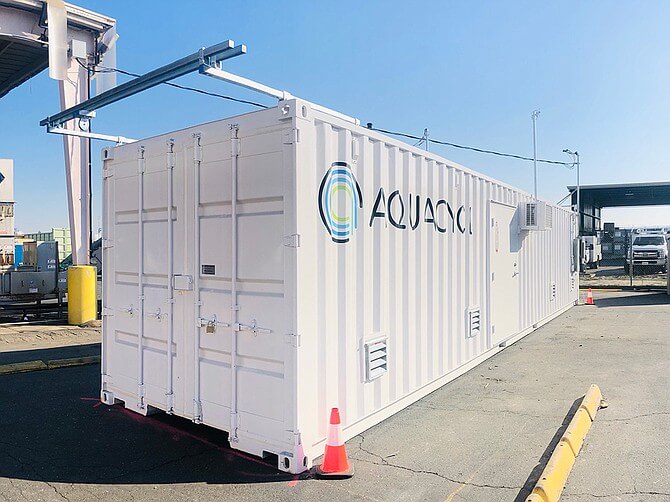
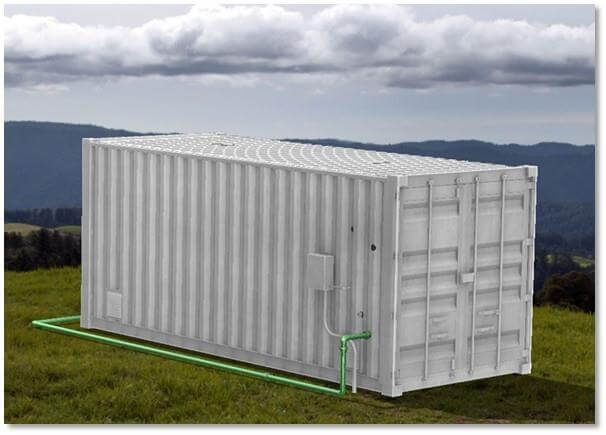
- Compact footprint → reduces infrastructure investment and frees up facility space
- Onsite treatment of the toughest wastewater → eliminating hauling entirely and have confidence in your discharge compliance with reliable treatment under variable production conditions.
- Fully managed service → all maintenance, emergency response, daily operations and improvements included at no extra cost under the term of your contract.
- 100% performance guarantee → no hidden fees, no surprise surcharges, and compliance assured
And because Aquacycl provides wastewater treatment-as-a-service, your system is fully managed with 24/7 remote monitoring and control. That means no additional burden on your facility team, no surprise costs, and no risk of noncompliance.
Turning Wastewater into an Asset
With Aquacycl, wastewater becomes an asset that:
- Pays itself back in as little as 12–24 months
- Stabilizes long-term operating costs
- Enables production growth without wastewater bottlenecks
- Strengthens sustainability performance by cutting emissions, sludge, and energy use
Set up a discovery call with our team for a full wastewater assessment and see how fast you can realize an ROI on your wastewater investment.