



In Part 1 of this series, we explored why industrial wastewater monitoring is about much more than knowing what is going down the drain.
But visibility is only the beginning.
Once you can see wastewater conditions continuously, the data starts telling you something much bigger: what is happening inside your production process.
Unexpected spikes in wastewater concentration profiles or flow rates can reveal lost product, equipment problems, inefficient cleaning events, process changes, and other operational issues that may otherwise go unnoticed.
That makes wastewater more than an environmental output.
It can become an early-warning system for your operation. Done right, it is also a system that acts on its own, before a warning becomes a costly event.
What Can Wastewater Data Tell You About Production?
Industrial wastewater, or process water, is closely connected to what is happening on the production floor.
When production changes, wastewater profiles change with it.
A sudden increase in BOD or COD may coincide with a product changeover. An unusually large spike may indicate product entering the drain. A recurring pattern could point to an inefficient cleaning cycle, equipment issue, or automation problem – all things that contribute to higher expenditures and/or revenue losses.
Without continuous and real-time monitoring, those events can disappear into an average.
You may see the impact days or weeks later through a sewer surcharge penalty, an overloaded onsite treatment system, or higher hauling costs – but by then, the production event that caused it may be difficult or impossible to trace.
Real-time monitoring of process flows leaving the facility connects production events to potential operational impacts exactly when they happen, allowing teams to ask:
- What was running at that time?
- Was a line starting up or shutting down?
- Was a CIP cycle underway?
- Did an equipment or automation issue occur?
- Was valuable product lost to drain?
That connection turns wastewater data into operational intelligence. But intelligence only pays off if something responds to it before the event reaches your treatment system or the sewer.
Catching Problems Before They Become Bigger Problems
Most plants already monitor critical production assets because early detection matters.
Wastewater deserves the same attention.
A production issue that sends an unusually concentrated stream to drain, or a pure ingredient, can quickly become a wastewater problem and cost overrun in production. That spike can overwhelm onsite treatment, increase discharge loading, trigger surcharges, require emergency hauling, or create compliance risk. A single missed high-strength event can mean thousands of dollars in emergency hauling and surcharge costs.
By characterizing baseline operations and automatically detecting and alerting teams about abnormal conditions as they happen, teams have an opportunity to react in real-time and avoid future issues rather than discovering the issue after costs have already accumulated and traceability is gone.
The goal isn’t simply better wastewater management.
Its immediate operational awareness paired with an automatic first response, not just an alert.
Protecting the Treatment Infrastructure You Already Have
Production variability doesn’t only affect the sewer bill.
High BOD and COD loads can also put significant stress on existing wastewater infrastructure in your plant or in your community.
Aerobic and anaerobic systems perform best when flows and organic loads are steady and predictable. Sudden and extreme changes to flow or BOD concentrations entering a collection system can introduce spiraling instability like biomass washout even when the average daily wastewater profile, as measured through composite sampling, appears manageable.
When a high-BOD or high-COD event occurs, that concentrated flow can be automatically isolated into a separate holding tank or treatment system before it reaches downstream treatment or a larger collection system. Lower-strength wastewater continues through the existing system, while the problem stream is directed to a more appropriate treatment pathway or held and released under more controlled conditions. No operator has to see an alert and react manually because the system has already acted.
Instead of forcing the entire supporting infrastructure to absorb every production upset, facilities can manage variability at the source.
That can help extend the usefulness of existing assets, reduce operational strain, and potentially avoid unnecessary infrastructure expansion.
From Reactive Wastewater Management to Proactive Operations
Traditional wastewater management is often reactive, and operators are responding to events that happened hours or days in the past.
A bill increases.
A permit sample comes back high.
A treatment system struggles.
A hauling request becomes urgent.
Then the investigation starts.
Continuous wastewater data with automated response changes that sequence.
Facilities can identify recurring events, cross-compare production efficiencies across different manufacturing lines, evaluate cleaning and sanitation practices, understand how new products affect overall plant performance and output, and plan expansions using actual operating data instead of historical assumptions.
That creates the best kind of feedback loop:
Monitor. Alert. Correct. Optimize.
With benefits reaching far beyond wastewater.
Better Data Means Less Risk
Production rarely stays the same.
Facilities add manufacturing capacity, introduce new products, install new equipment, automate more processes, increase throughput, change cleaning procedures, and modify operating schedules.
Every one of those changes can affect overall production efficiency, which can be easily tracked through monitoring the process water leaving the plant and quantifying the chemical, water, and ingredient lost to the drain.
Without good data, production changes create uncertainty:
- Is a valve stuck open?
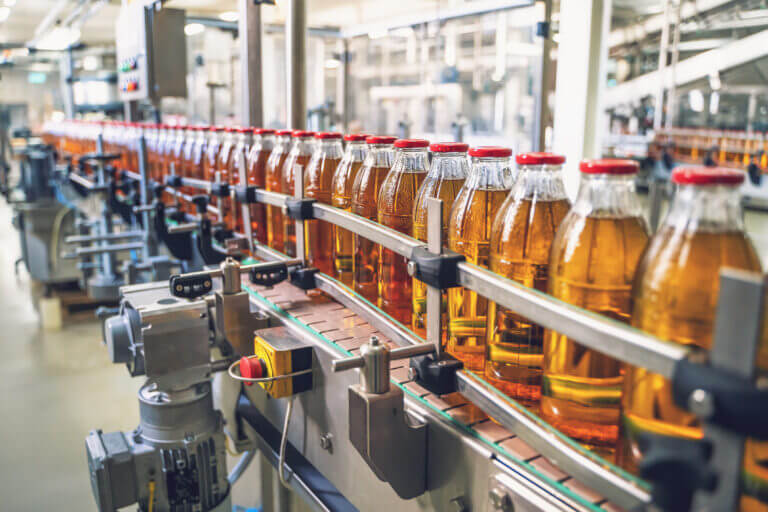
- Is a filling station overfilling the bottles?
- Is the CIP rinse using too much water?
- Will wastewater load increase beyond permit limits?
- Can the existing treatment system handle these flows?
- Will additional infrastructure be required?
Real-time monitoring provides a baseline, an automated alert system, and the prediction capability to model operational impacts before changes are made.
That gives operations and engineering teams better information to scale production without blindly increasing wastewater or production risk.
How Aquacycl Turns Wastewater Data into Action
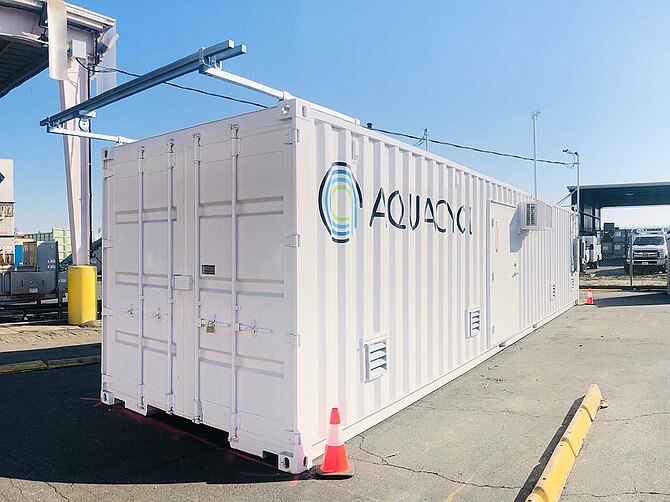
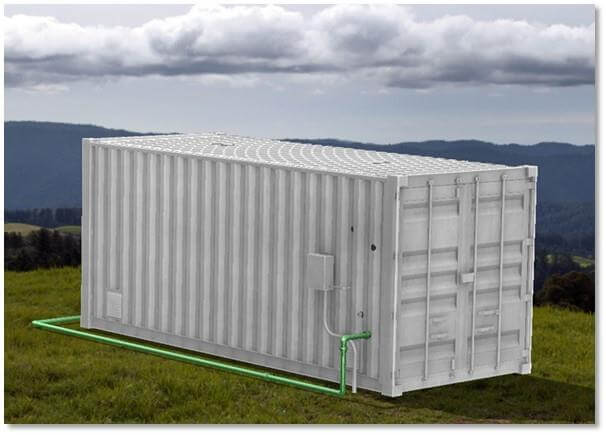
Aquacycl’s Monitoring & Diversion solution continuously measures wastewater conditions, identifies and acts upon events in real time.
But data isn’t the end goal.
The system sends a notification to operators about what has changed and offers insights into what to look at in production that could be leading to these changes. A conventional analyzer or AI soft-sensor platform stops there, leaving a person to interpret the alert and intervene manually. Aquacycl’s system goes further. With Aquacycl monitoring and diversion solutions in place, a high-strength event will be measured, quantified, and automatically routed to a holding tank or treatment system without waiting for someone to respond.
Why Detection Alone Isn’t Enough
Industry research on AI-driven soft sensors – which predict BOD or COD from surrogate signals such as pH, dissolved oxygen, and conductivity rather than measuring the event directly – consistently finds that their accuracy degrades during storms, unusual industrial discharges, and major process upsets, precisely because those events are underrepresented in the data used to train the models.
These approaches fail exactly when a facility is at the greatest risk of a costly wastewater event. Soft sensors are best deployed as a complement to periodic lab testing and confirmatory sampling, not a replacement for it, particularly where compliance reporting requires certified lab methods.
Aquacycl’s Monitoring & Diversion solution measures the event directly rather than predicting it, so protection does not depend on how closely today’s upset resembles yesterday’s training data.
High BOD is difficult to measure. Today’s hardware sensors run into similar limitations as soft sensors. Even the best-performing inline BOD and COD analyzers on the market are built to operate within a defined measurement range, and they lose accuracy or saturate outright once concentrations climb past roughly 3,000–5,000 mg/L BOD. However, industrial effluent does not always stay inside that range.
Batch discharges, product losses, and CIP cycles in food & beverage applications routinely push BOD above 30,000 mg/L for short windows, and these order-of-magnitude spikes fall outside what conventional hardware, or the soft sensors trained on its data, can reliably track.
The Spikes Are The Problem
BOD spikes don’t disappear just because no instrument captured them – they still load the treatment system and can cause serious problems, especially in facilities with lower flows or active water conservation measures.
This is precisely where Aquacycl specializes. Our Monitoring & Diversion solution identifies the highest-BOD effluents and rapid BOD swings, then automatically segregates those spikes before they blend into the waste stream and become an unmanageable loading event for the facility or the utility.
For the industrial end-user, the value is real-time visibility into upstream production issues, – insight that drives process optimization and extends asset life – paired with an automatic response to adverse events, no operator intervention required.
High-strength wastewater is automatically diverted to targeted treatment or containment, while the remaining flow continues uninterrupted through existing infrastructure or the city collection system.
The result isn’t just more data. It’s better operational decisions – backed by a system that’s already protecting your infrastructure while you make them.
The Bottom Line
Your wastewater is constantly giving you information about your operation.
The question isn’t just whether you can see it – it’s whether something responds when it matters.
Real-time wastewater monitoring gives industrial facilities another way to detect production losses, understand process variability, protect treatment infrastructure, manage risk, and plan confidently for future growth.
That is why Monitoring & Diversion should not be viewed solely as a wastewater solution.
It’s an operational intelligence and protection tool that happens to start at your floor drains.
See what your wastewater can tell you. Explore Aquacycl’s Monitoring & Diversion solution – and see what happens automatically when it matters most. Request a wastewater characterization assessment to find out what your process water is already telling you about your operation.